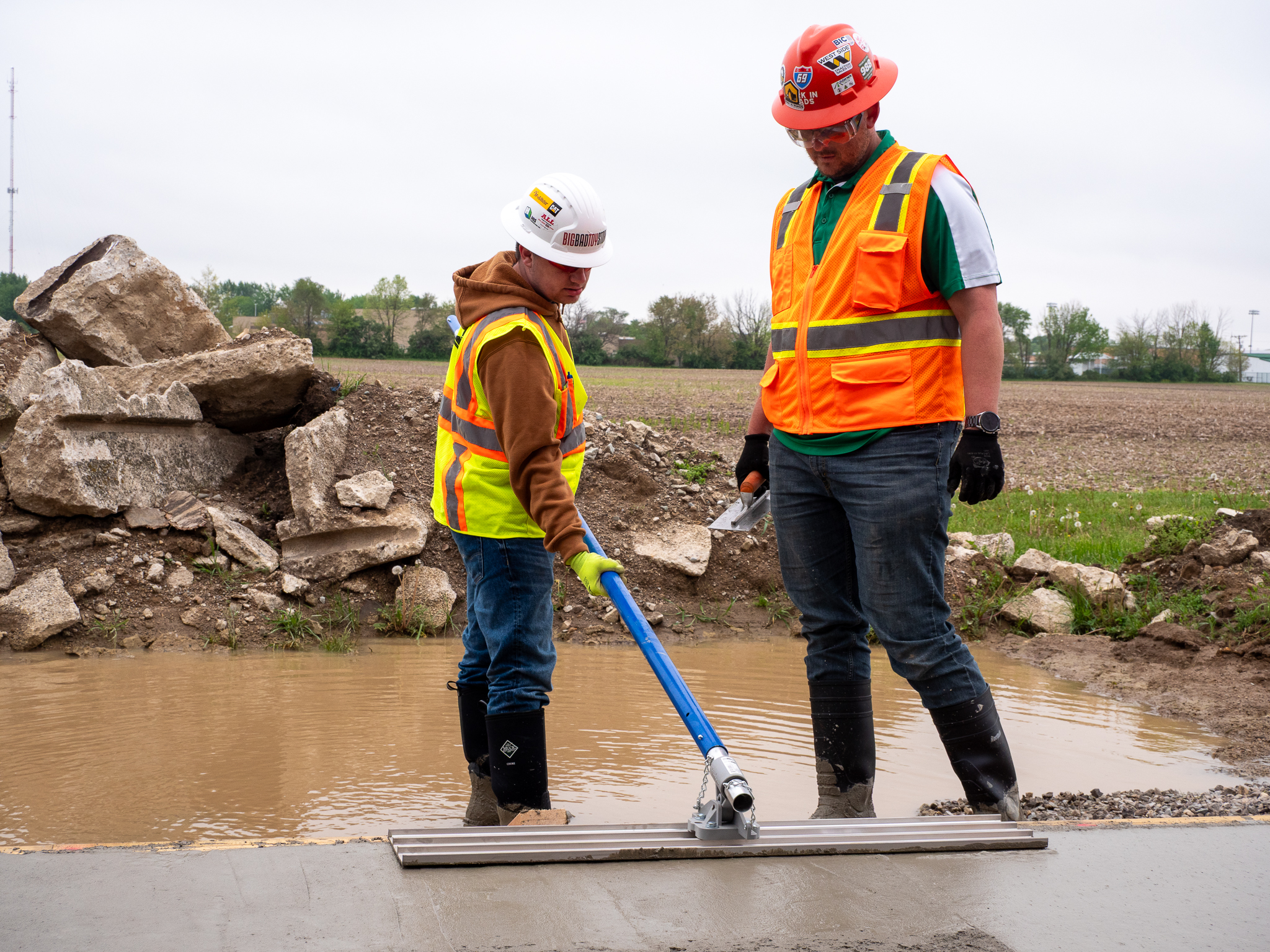
Forget what you think you know about a successful career. The days of having to get a degree to get a high-paying job are over, and the options for what a “successful career” looks like have never been more different.
A four-year college degree is not the only path to a successful career. Across Indiana and the rest of the country, the civil construction industry offers opportunities for people who want to work hard, work with their hands, and create a future for themselves without spending four years in a college classroom.
From operating heavy equipment to surveying construction sites and managing projects, there are a ton of construction jobs in Indiana that do not require a bachelor’s degree.
Some positions provide on-the-job training, while others involve apprenticeships, industry certifications, or technical education.
For high school graduates, career changers, and people exploring alternatives to college, road and civil construction give you many career options worth considering.
What Construction Jobs Can You Get Without a College Degree?
The construction industry includes way more types of work than the people you see working beside the road. Here are five career paths to explore if you are ready to work hard and earn a great living.
1. Construction Laborer
If you have never worked in construction, one of the best places to begin your career is with your boots on the ground as a laborer.
Construction laborers help prepare job sites, move materials, install components, assist tradespeople, and support crews throughout a project. In road construction, their work may involve things like drainage systems, concrete, paving preparation, and site cleanup.
Many laborer positions provide on-the-job training, making this a practical entry point for people with little or no construction experience. With additional training and experience, laborers may pursue specialized jobs or advance into crew leadership.
2. Heavy Equipment Operator
Heavy equipment operators control machinery like excavators, bulldozers, loaders, and more. These professionals help move dirt, prepare roadbeds, and build the foundations of infrastructure projects.
Workers typically develop learn and perfect their skills through experience on the jobsite, employer training, apprenticeships, or other equipment-specific instruction.
Equipment operation can be a good fit for people who enjoy machines, have an eye for detail, and hands-on problem-solving.
3. Construction Survey Technician
Survey technicians help construction teams understand exactly where the jobsite needs to be built. They collect measurements, get reference points, and use specialized instruments and positioning technology to help crews follow project plans.
This career combines outdoor work, math, and technology. Requirements can change by employer, but some technician positions can be accessed through technical education, certificates, or practical training rather than a four-year degree.
4. Paving Crew Technician
Paving crews help build and maintain the roads people use every day. Depending on the position, responsibilities may include preparing surfaces, placing asphalt, assisting equipment operators, and supporting compaction and finishing work.
Paving offers opportunities to learn specialized construction skills while working as part of a crew. Experience and additional training can open up chances for more technical responsibilities and leadership positions.
5. Construction Technician
Construction technicians work with materials, testing equipment, measurements, and technical procedures to help ensure projects meet required specifications.
Depending on the specialty, they may test concrete or asphalt, evaluate soil conditions, document results, or support quality-control processes. Some positions require specific certifications or technical training, but not all require a bachelor’s degree.
How Much Can You Make in Construction Without a Degree?
How much you can make will vary based on occupation, experience, location, training, and employer. Benefits, overtime, and advancement opportunities can also make a huge difference in \ total compensation.
Indiana’s Department of Workforce Development reported that the state’s construction industry employed 169,546 Hoosiers in 2024, with average annual wages of $77,792 across the sector. This is an industry-wide average, not the starting salary for an individual construction job. Source: Indiana Department of Workforce Development.
The important takeaway is that construction includes a wide range of career levels. Research wages for individual occupations rather than assuming every job pays the same.
Indiana’s INDemand Jobs resource can help you explore occupations by education requirements, wages, and projected demand.
How to Get Started in Construction After High School
You don’t have to wait until you graduate from college to start building a construction career. In fact, some career paths allow you to start earning while learning on the job.
Here are three ways to get started:
Apply for entry-level positions. Look for laborer, construction helper, and other jobs that provide training to new employees.
Explore apprenticeships. Apprenticeships combine paid work with structured instruction, letting you build skills while gaining experience.
Research technical training. Certificates and specialized programs can help prepare you for equipment operation, surveying, construction safety, and other technical roles.
High school students can also explore career and technical education programs, jobsite experiences, and opportunities to connect with construction professionals before graduation.
Can You Advance Without a Four-Year Degree?
Absolutely. Many construction careers offer opportunities to take on greater responsibility as you build experience and develop new skills.
We have personally seen students go from our high school program to project managers on million dollar jobsites within just a few years.
A laborer might pursue specialized training and become an experienced crew member. An equipment operator could learn additional machines and move into a lead role. A technician might develop expertise in quality control or construction testing.
Other career paths, including things like project management, estimating, and engineering, may require additional education, certifications, or experience depending on the position. The key for your personal career journey is understanding the qualifications for your intended role and planning accordingly.
Explore Construction Careers in Indiana with Work IN Roads
Choosing a career is easier when you can see what the work actually involves. Work IN Roads connects Hoosiers and people all over the state with information on road construction careers and opportunities across the industry.
Explore the Work IN Roads career paths to discover roles ranging from laborers and operators to survey technicians, estimators, and project engineers.
For students, parents, and educators, the Civil Construction Pathway also provides a way to explore the industry and connect education with real-world career opportunities.
A four-year degree can be a great choice, but it is not the only way to build a rewarding future. If you enjoy solving problems, learning real life skills, and workin on that matter, construction may offer a career path worth exploring.