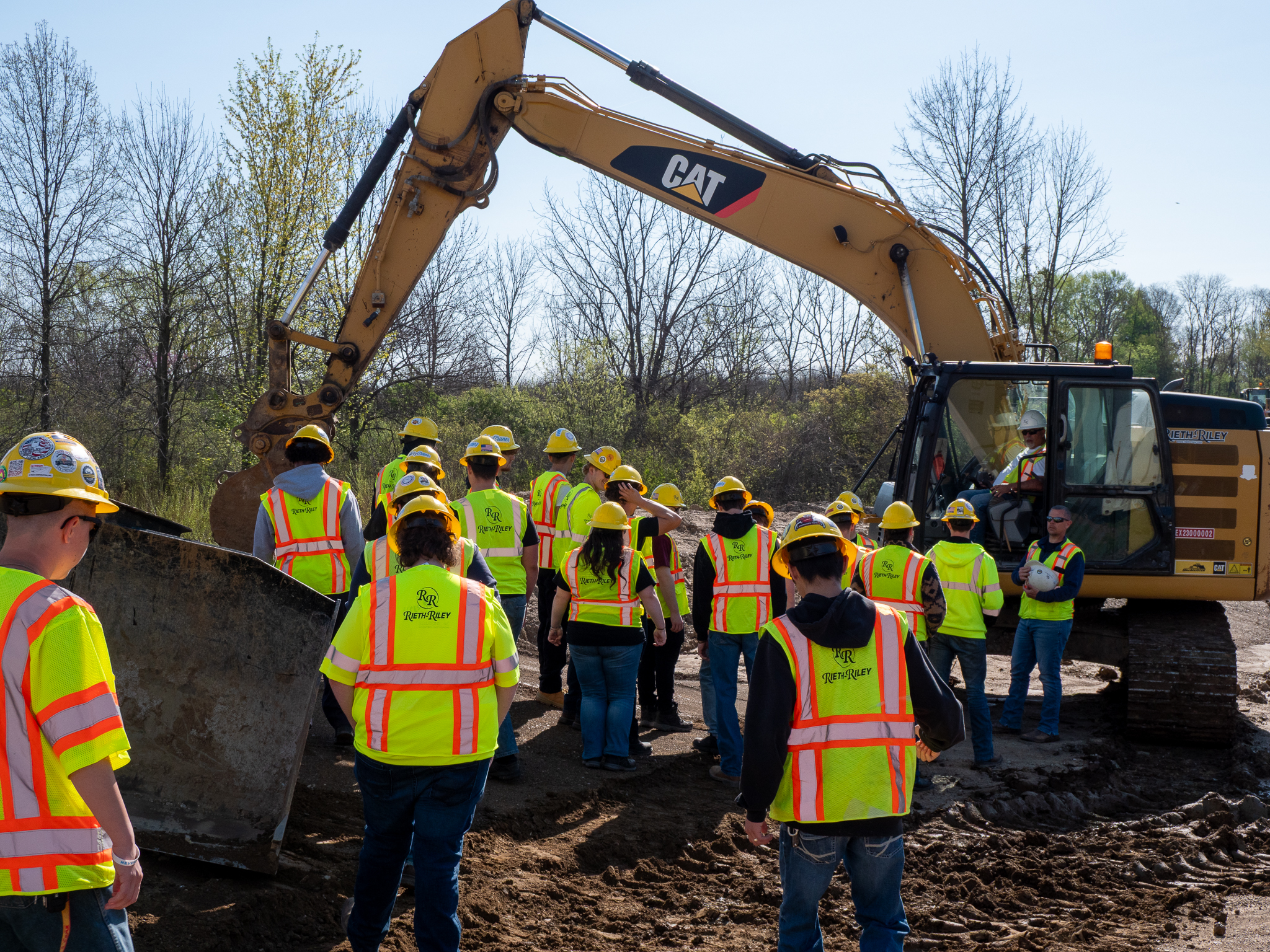
If you have come across this blog, then you havew already taken the first and most important step in fiding your dream career. Which just might be working as a heavy equipment operator.
If you have ever watched an excavator dig a trench, a bulldozer move tons of dirt, or a grader create a perfectly level road, you have seen heavy equipment operators at work.
The men and women behind these machines help build Indiana’s roads, highways, bridges, and other essential infrastructure.
Becoming a heavy equipment operator in Indiana can be a great career option for people who enjoy working with their hands, operating machinery, solving problems, and seeing the results of their work. Best of all, many equipment operator career paths do not require a four-year college degree.
Here is what to know about the job, the skills employers look for, and how to start a career operating construction equipment.
What Does a Heavy Equipment Operator Do?
A heavy equipment operator operates specialized machinery to move earth, prepare construction sites, install infrastructure, and build roads. The equipment used depends on the project and the operator’s training.
Common types of construction equipment that heavy equpmne operators may find themselves oninclude:
Excavators: Dig trenches, foundations, and drainage systems.
Bulldozers: Push soil, clear land, and prepare construction sites.
Motor graders: Level surfaces and shape roadbeds.
Loaders: Move aggregates, soil, and other construction materials.
Asphalt pavers and rollers: Help place and compact asphalt during paving projects.
In heavy highway construction specifically, operators work alongside laborers, truck drivers, surveyors, and other skilled professionals.
Accuracy matters. A small adjustment to a machine can affect drainage, pavement thickness, and the quality of the finished roadway. So you have to be on your A game at all times.
Equipment operators also complete inspections, follow jobsite safety procedures, communicate with crew members, and help maintain their machinery.
How Much Do Heavy Equipment Operators Make in Indiana?
Construction equipment operator pay depends on experience, the type of equipment operated, employer, location, and project schedule. Specialized operators and experienced workers may have opportunities to earn more as their skills develop.
When comparing job opportunities, look beyond the starting hourly wage. Ask about overtime, benefits, paid training, retirement plans, and advancement opportunities that are hard to find in most other industries.
Some employers also offer apprenticeship programs that allow workers to earn while developing valuable skills.
How to Become a Heavy Equipment Operator in Indiana
There is no single path into equipment operation. The right route depends on your experience, interests, and the employers in your area.
1. Start with an Entry-Level Construction Job
One of the best ways to start your career in the industry is to begin as a construction laborer. Laborers help prepare job sites, move materials, assist equipment operators, and support the crew throughout a project.
Working alongside experienced operators gives you a real-life look at how equipment is used and how construction projects run. It can also help you learn jobsite safety, construction terminology, and the teamwork required to succeed.
2. Training and Apprenticeship Opportunities
Construction training programs can introduce you to equipment operation, work-zone safety, site preparation, and the fundamentals of heavy highway construction.
Which can be very helpful for someone who wants to get into construction depsite having never been in the indsutry before.
Apprenticeships are another option. These programs combine paid employment with structured instruction and supervised, hands-on learning. Contact construction employers and relevant training organizations to learn which opportunities are available in your area.
3. Develop the Skills Employers Want
Operating heavy equipment takes more than knowing which controls to move. Successful operators develop a combination of technical ability and professional habits.
Important skills include:
Attention to detail
Mechanical knowledge and equipment inspection skills
Communication and teamwork
Problem-solving
A strong commitment to safety
The ability to follow plans, measurements, and instructions
Math skills can also help operators understand grades, distances, elevations, and site measurements. Modern construction equipment increasingly includes digital displays, GPS guidance, and machine-control technology, so being comfortable with technology is an advantage.
4. Build Experience and Specialize
As you gain experience, you may have opportunities to learn additional machines, work on more complex projects, or pursue specialized training.
Some operators focus on earthmoving and excavation, while others develop expertise in grading, paving, or other types of construction work. Experienced operators may eventually move into crew leadership, foreman positions, or other supervisory roles.
Is Heavy Equipment Operation a Good Career?
For people who enjoy physical, hands-on work, heavy equipment operation can be absolutely fantastic.
You can build the skills you need without ever earning a bachelor’s degree, contribute to projects that your own communities depend on, and grow into leadership roles over time.
Start Exploring Construction Careers in Indiana
You don’t need to know how to operate a bulldozer on your first day to start working toward this career. Being curious, reliable, having a willingness to learn, and a commitment to staying safe are all things that potential employers look at.
Even if you do not have the direct experince you may think you need.
Work IN Roads helps connect Hoosiers with career opportunities in road and civil construction. Explore the Work IN Roads career paths to learn about equipment operation and other roles that help build Indiana’s infrastructure.
The next time you see a major road project underway, remember that every machine has an operator behind the controls. That person could be you.