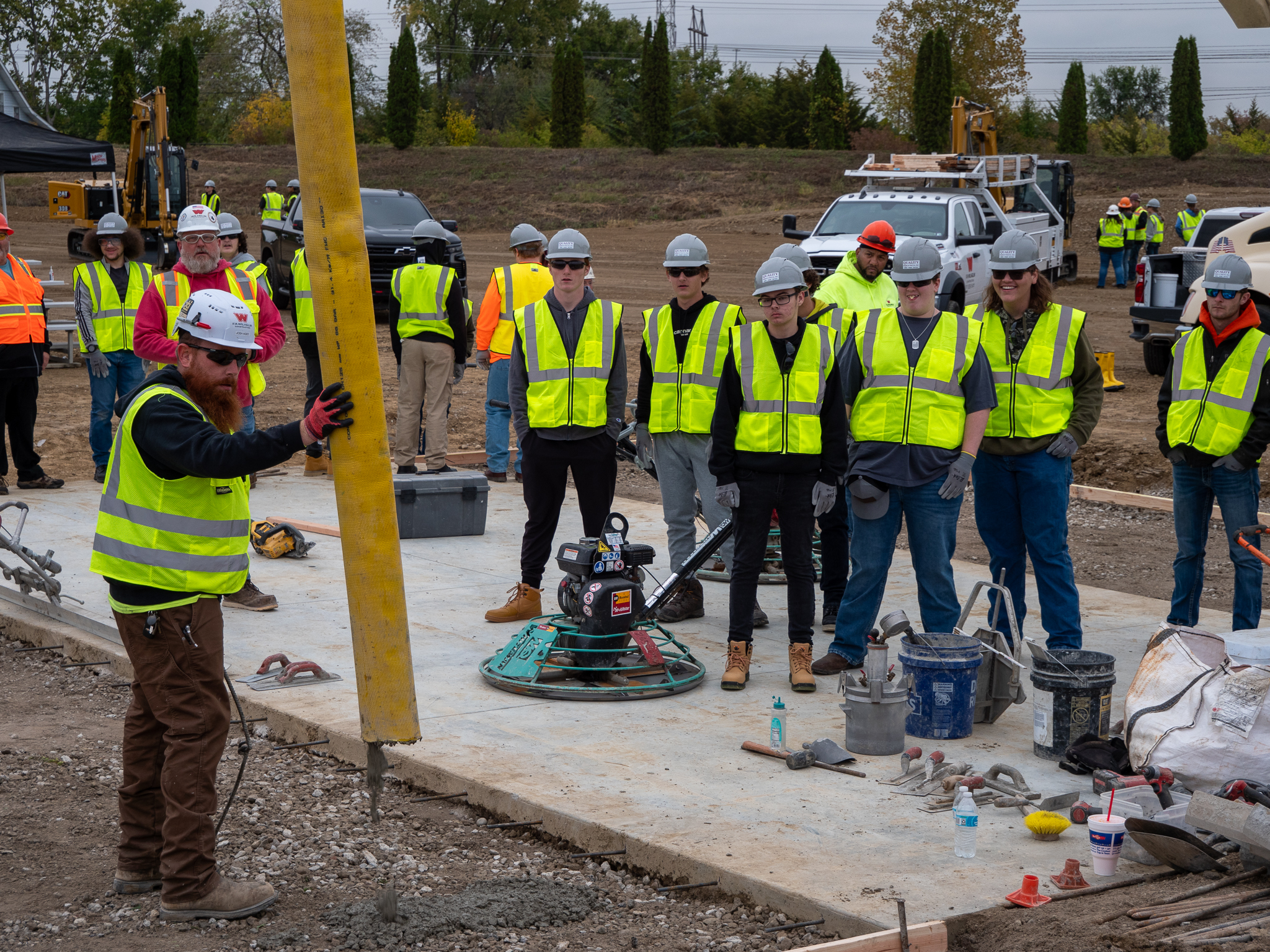
Civil construction is one of the most important industries in the country, and there is no way around that, but it’s also one of the most misunderstood.
If you’ve never worked in construction, it’s easy to assume it’s all hard labor, long hours, and not much room to grow. But in 2026, those old ideas don’t match the reality.
Whether you’re thinking about a career change or you’re exploring options for the first time, here are five of the biggest myths about civil construction and the truth that might surprise you.
Looking for more info on careers in construction? Check out this blog here.
Myth 1: “Construction is just manual labor.”
The truth: Civil construction has more career paths than most people realize!
Sure, laborers and operators are essential. But construction today includes way more than that! Here are just a few of the different paths:
- Surveying
- Project management
- Quality control
- Traffic management
- Welding and fabrication
- GPS and drone technology
- Safety coordination
- Trucking and hauling
- Underground utility work
Jobsites today rely on much more than manual labor. You have to factor in technology, communication, logistics, scheduling, leadership, troubleshooting, and problem-solving.
There are roles for people who love hands-on work, as well as for those who would rather do the planning, supervising, organizing, or using tech.
Myth 2: “You can’t make good money without years of experience.”
The truth: Construction pays well from the start, and long-term earnings are some of the strongest of any non-degree industry.
Most industries force you into low-paying, entry-level positions that barely cover living costs. Not civil construction. In 2026, an entry-level laborer often starts above $20 an hour, depending on where you are in the country, with overtime opportunities that significantly increase take-home pay.
And that’s just the beginning. With time and training, workers can advance into:
- Heavy equipment operation
- Crew leadership
- CDL driving
- Pipe laying and utility work
- Asphalt and concrete specialty roles
- Foreman or superintendent positions
- Project coordination or project management
Raises often come from learning skills, not waiting for a promotion. Many people double their earnings within a couple of years simply by showing up, working hard, and being willing to learn.
That makes civil construction one of the most accessible and profitable career changes for adults ages 20–40.
Myth 3: “Construction has no stability.”
The truth: Infrastructure work is one of the most stable careers in the nation.
While other industries rise and fall with the economy, civil construction remains steady because society literally cannot function without it.
Roads, bridges, sidewalks, stormwater systems, airports, trails, and utilities must be built, repaired, and upgraded, no matter what else is happening.
Add the current federal infrastructure funding boom, plus state and local commitments to long-term construction plans, and the result is simple: There is more work than there are workers.
Myth 4: “Construction is unsafe.”
The truth: Today’s civil construction industry is safer than it has ever been, and it keeps improving every year.
Safety today is not a suggestion; it’s a culture, which you will find at a ton of civil construction companies all over the country.
Modern companies train crews before they ever step on a jobsite, run daily safety briefings, use specialized equipment, useprotective systems, and follow strict standards.
Some of the other advancements include:
- Technology helps monitor hazards.
- Training pathways prepare even brand-new workers.
- Safety teams work daily with crews.
- Young workers are taught to speak up, stop work, or ask questions.
Workers aren’t expected to “just figure it out.” They’re trained, supported, and backed by teams whose whole job is keeping people safe
Myth 5: “Construction is only for people who always wanted to do it.”
The truth: Most people in civil construction did not grow up planning to be here, and they discovered the industry later.
From teachers and retail workers to restaurant managers, warehouse associates, mechanics, HR professionals, gamers, and military veterans, construction is full of people who started somewhere else.
What they found was:
- Work that feels meaningful
- A career path with growth
- A team environment
- Skills that translate anywhere
- A supportive industry that wants them to succeed
You don’t need a family background in construction. You don’t need to know everything on day one. You just need to be willing to start and show
The Bottom Line
Civil construction in 2026 isn’t what most people imagine. It’s modern, high-tech, well-paying, and welcoming to people looking for a fresh start.
If you’re searching for a career with long-term stability, real advancement, and work you can be proud of, busting these myths might be the first step to finding your place in this industry.